
Photographer's Day: see now in this detailed article which are the essential equipment for beginner photographers!
Advertisements
On Photographer's Day, celebrated in various parts of the world as a tribute to the art of capturing moments.
In this sense, it is impossible not to think about the first steps of those who want to enter the world of photography.
Among the countless decisions a beginner photographer needs to make, choosing the right equipment is at the top of the list.
After all, the quality of the images depends as much on the creative vision as on the tools used.
This article will cover the essential equipment for beginner photographers, presenting insights and arguments that will help guide your choices.
1. Choosing a Camera: The First Step on the Journey
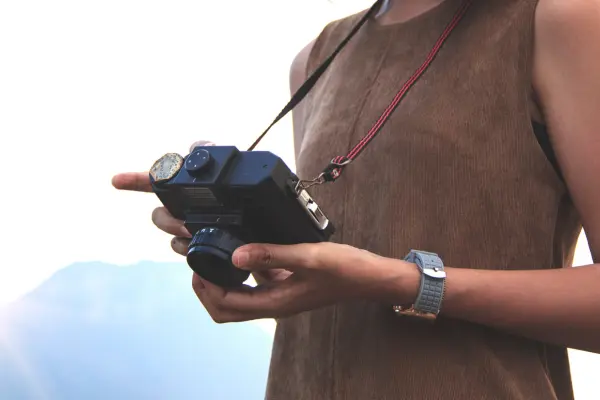
DSLR or Mirrorless: Which is the Best Option?
For many beginners, the doubt between DSLR and mirrorless cameras is common.
In this sense, both have their advantages, and the ideal choice will depend on your needs.
To the DSLRs are known for their robustness and wide availability of lenses, while mirrorless offer a compact design and the latest technologies.
Additionally, DSLRs like the Canon EOS Rebel T7 or Nikon D3500 are great entry-level options, allowing for a solid learning curve.
On the other hand, models like the Sony Alpha a6000 represent the mirrorless category, standing out for their portability.
Furthermore, it is crucial to consider cost-benefit.
Many beginning photographers can benefit from gently used cameras, saving money without compromising on quality.
In short, a determining factor should be comfort: try holding the camera and test its settings before purchasing.
Sensor and Resolution: What Really Matters
There is often an obsession with megapixel count.
++ Google Workspace: 5 hidden tricks that make your routine easier
However, sensor size is even more crucial to image quality.
For example, APS-C sensors, common in entry-level cameras, offer a great combination of quality and cost.
While full-frame sensors are desirable, they are more expensive and often unnecessary for beginners.
A comparison table below helps visualize the difference:
| Sensor Type | Approximate Size | Benefits for Beginners | Camera Examples |
|---|---|---|---|
| APS-C | 22 x 15 mm | Good image quality, affordable cost | Canon EOS Rebel T7 |
| Full-Frame | 36 x 24 mm | Higher quality in low light, greater investment | Canon EOS R6, Nikon Z6 |
| Micro Four Thirds | 17 x 13 mm | Compact, ideal for travel | Panasonic Lumix G85 |
2. Lenses: The Eye of Photography

Versatile Lenses for Beginners
A quality lens makes all the difference, and versatility is key here.
So for starters, lenses like zoom (like 18-55mm) are ideal as they cover a wide range of scenarios, from landscapes to portraits.
However, prime lenses like the 50mm f/1.8 offer excellent value for money and a deeper understanding of composition and depth of field control.
It is important to understand how lens aperture influences light and image quality.
Lenses with a wide aperture (f/1.8 or f/2.8) are great for low-light photography and for creating the blurred background effect popular in portraits.
Cost and Compatibility
Not all lenses are compatible with all camera bodies.
Therefore, checking the specific mount (such as Canon EF, Nikon F or Sony E) is essential to avoid frustration.
Additionally, lenses from independent manufacturers like Sigma and Tamron often offer great quality at more affordable prices.
++ Free SEO tools that will boost your website traffic
3. Tripod: Stability in Any Situation
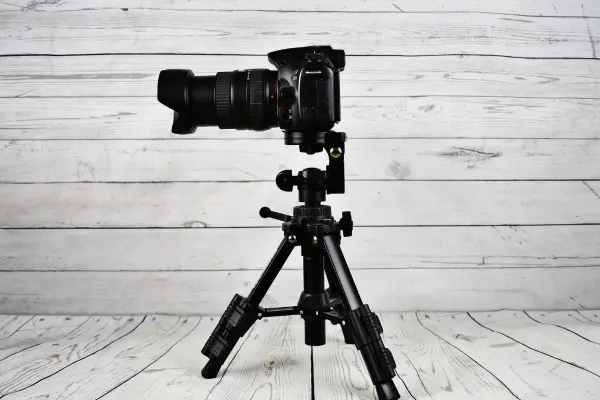
When and Why to Use a Tripod?
A tripod is essential for photographers who want to explore long exposures, night photography or even self-portraits.
For beginners, lightweight and compact models such as the Manfrotto Compact Action are ideal.
In short, they provide stability without requiring a large investment.
Additional Resources to Consider
When choosing a tripod, look at features such as weight, maximum height, and load capacity.
An unstable tripod can compromise the final result, even with the best camera.
Furthermore, a quality head (responsible for camera movement) is a point to be evaluated.
| Feature | Importance for Beginners | Examples of Tripods |
|---|---|---|
| Lightness | Facilitates transportation | Manfrotto Compact Light |
| Adjustable Height | Allows greater flexibility | Vanguard VEO 2 |
| Load Capacity | Supports DSLRs and heavy lenses | Joby GorillaPod |
4. Lighting: Master the Light
The Importance of a Good Flash
Mastering light is one of the biggest challenges in photography.
In this sense, a external flash It is a great ally, allowing professional results even in poorly lit environments.
Models like the Godox TT600 are affordable and offer excellent performance.
Continuous Light and Softboxes
For product or portrait photography, investing in continuous lights and accessories like softboxes is a great idea.
They create softer, more even lighting, reducing harsh shadows.
5. Other Essential Accessories
Memory Cards and Extra Batteries
There's nothing more frustrating than running out of space or power during a photo shoot.
Therefore, investing in high-speed SD cards and additional batteries is essential.
Brands like SanDisk and Lexar are known for their reliability.
Backpack and Protection
A camera backpack isn't just about style.
It protects your gear and makes it easy to transport. Models like the Lowepro ProTactic 350 AW offer well-organized compartments and extra impact protection.
6. Editing Software: Finishing the Artistic Touch
Why is Editing Essential?
Photography doesn’t end with the click. For many beginners, the editing process may seem secondary, but this is where the magic really happens.
Adjusting colors, contrast, sharpness and removing small imperfections can transform an ordinary photo into something extraordinary.
++ How to get the most out of Telegram: Tricks and hidden features
Therefore, investing in good editing software is essential to complete the creative journey.
Software Options for Beginner Photographers
Fortunately, there are plenty of affordable, easy-to-use options for beginners.
THE Adobe Lightroom is widely recommended for its intuitive interface and powerful tools for basic and advanced tweaks.
Free alternatives such as GIMP and the Darktable, are also excellent, offering robust features at no cost.
For more detailed edits or creative manipulations, the Adobe Photoshop is a versatile choice.
Although the learning curve is steeper, mastering the software is a differentiator in the market.
Tips for Maximizing Editing
When editing, balance is key.
Avoid exaggerations, such as excessive saturation or removal of natural textures, which can compromise the realism of the image.
Also, use presets to streamline your workflow, but be sure to customize them to create a unique style.
And remember: the goal of editing is to enhance the photo, not to mask composition or exposure problems.
With the right equipment and digital tools, beginners have everything they need to take their photography to a professional level.
Essential Equipment for Beginner Photographers: Conclusion
On Photographer's Day, reflect on the essential equipment for beginner photographers It is an exercise that goes beyond technique.
In this way, it is about understanding that the equipment is an extension of creativity and vision.
Investing in the right tools from the start paves the way for smoother learning and more satisfying results.
Ultimately, remember that the most important thing is to use the resources available to you to explore your unique vision and capture memorable moments.
Now it's time to choose your equipment and start your journey!
