
Games as a social space They stopped being mere distractions a long time ago.
Advertisements
In 2026, they will have become a public square, a bar, a living room, and a meeting point all at once—all within a server that never shuts down.
What used to be "I'm going to play a little" has become "I'm going to meet up with the guys," and this change is not superficial.
It says a lot about how we relate to each other today.
Anyone who still sees gaming as a solitary escape might need to spend a random night in a crowded Discord server.
There, you'll find a mix of lame jokes, heavy rants, career advice, and barbecue plans.
Games as a social space They didn't steal the place of the physical world. They only expanded what it means to be together when time and distance conspire against it.
Keep reading!
Summary
- What has really changed for the Games as a social space Will they gain strength?
- How did the games become a meeting point without seeming to make an effort?
- What are the impacts? Games as a social space How do they bring this to real life?
- Why Games as a social space Do they bring people closer instead of pushing them away?
- Two stories that show the concrete side of this change.
- Frequently asked questions about Games as a social space
What has really changed for the Games as a social space Will they gain strength?
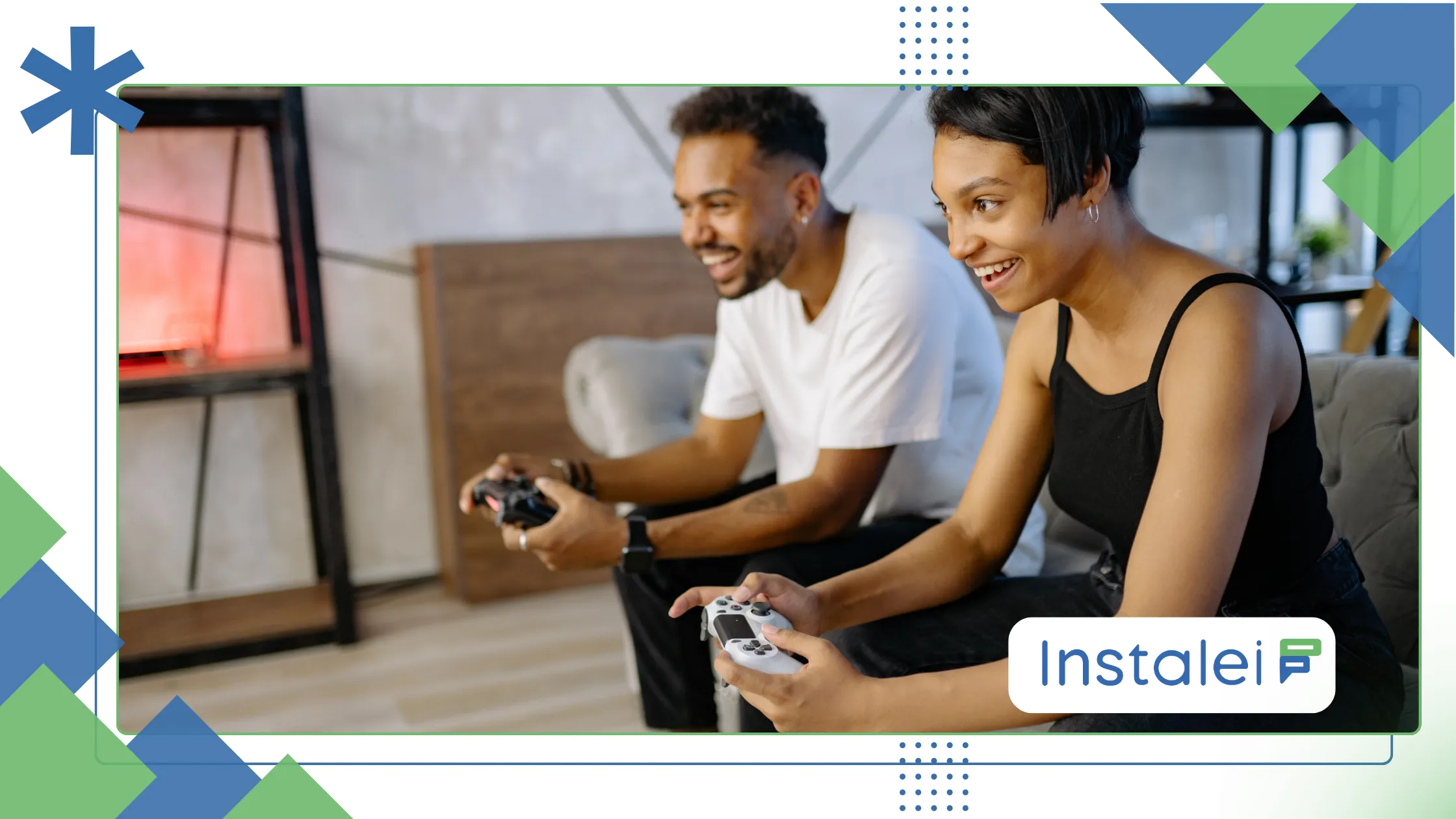
The turnaround didn't come from a magic update.
It came from the combination of increasingly digital lives, more natural voice tools, and a generation that never separated online from offline with the rigidity of previous generations.
In 2026, Roblox, Fortnite, Valorant, and even calmer games like Animal Crossing function as virtual neighborhoods where people are present every day.
There's something unsettling about this: while many still repeat that "playing isolates," the numbers tell a different story.
Reports from 2025 indicate that 581% of Generation Z youth consider gaming their primary space for socialization, leaving behind even messaging apps and traditional social networks.
This is not a passing fad.
It's a symptom of how the real world, with its rigid schedules and increasing distances, has left gaps that games have been able to fill.
The most curious thing is that adults have also joined in on this dance.
Those with busy schedules discover that a dedicated server leads to more genuine conversations than months of "we need to see each other."
Read also: Trends in science fiction and science fiction films and series in 2026
How did the games become a meeting point without seeming to make an effort?
The magic lies in the integration.
You join the game, turn on your microphone, and the conversation just happens — no need to switch apps, no "wait, I'll add you on WhatsApp."
Real-time voice communication removes barriers and transforms the lobby into an impromptu living room.
Today's games offer even more: customizable worlds, virtual homes, private islands, private servers.
People don't just come back for the gameplay. They come back for the familiar atmosphere and the faces (or voices) they already know.
It's like having a public square that's open 24 hours a day, where everyone has a key to their own balcony.
What once required planning now happens naturally.
A casual game turns into a conversation about the day, a raid turns into a collective venting session, a collaborative build becomes creative therapy.
The game serves as a pretext, but the encounter is what remains.
++ How invisible technology is dominating apps in 2026
What are the impacts? Games as a social space How do they bring this to real life?
For many people, the impact is profound.
Those who feel out of place in their daily lives — due to shyness, work shifts, or simply living far away — find there a neutral territory where interaction flows without pressure.
Constant collaboration and shared goals create bonds that strengthen over time.
It's not romanticizing. Many report overcoming difficult periods of loneliness or anxiety thanks to stable gaming groups.
But there's an aspect that is often misunderstood: risk exists when balance is lost.
The problem is rarely with the game itself, but with a lack of boundaries or poorly moderated communities.
A question that always comes back: if so much genuine connection is born while shooting zombies or building block castles, why do we still insist on treating the virtual as less "real"?
++ People with disabilities and assistive technology: what has really evolved in recent years?
Why Games as a social space Do they bring people closer instead of pushing them away?
Because they demand active presence. Unlike endlessly scrolling through feeds, gaming forces you to react, decide, and collaborate.
Every mistake becomes an inside joke, every victory becomes a collective celebration. These shared memories stick together stronger than isolated likes.
An analogy that helps to understand: imagine a bar where everyone arrives with a simple mission — to win the round, explore the map, build something together.
The conversation arises around the activity, without that uncomfortable pressure of "I need to keep the conversation going". Games as a social space They work exactly like that.
The game is the bridge, not the wall.
Data compiled in 2025 shows that approximately 701% of young gamers met new people through games, and 631% developed close friendships.
These numbers are no coincidence. They reflect how repeated interactions and an integrated voice foster genuine connections.
Two stories that show the concrete side of this change.
Lucas, a 28-year-old engineer in São Paulo, has maintained the same squad of five friends for three years, a group he met playing Valorant during the pandemic.
Today they play three times a week, but the conversations go far beyond strategy: they talk about being fired, dating, politics, and even organize in-person barbecues.
When one of them lost his job, the group was the first place where he confided in someone and received practical advice.
What started as "just another game" turned into a real support network.
Maria, 19, from Recife, has always been the introvert in her class.
In Animal Crossing and later on quiet Minecraft servers, she found a group of girls who shared a love for creating and unhurried conversation.
They decorate islands, exchange ideas about real-life decoration, and have "movie nights" within the game.
Maria says she made deeper friendships there than in years of attending in-person school.
The game didn't turn her into an extrovert. It just gave her a space where she could be herself.
Frequently asked questions about Games as a social space
| Question | A straightforward answer |
|---|---|
| Do games isolate people? | When used in moderation and within healthy communities, the effect is usually the opposite. Isolation stems more from excess than from the game itself. |
| Are children and teenagers safe? | It depends on moderation and settings. Platforms with good parental controls and verified servers significantly reduce the risks. |
| Do I need to be good at the game to participate? | No. Many spaces value presence and conversation more than skill. Casual settings are perfect for those who just want to socialize. |
| Does time spent offline negatively impact offline life? | It can be harmful if there are no limits. But many people report that virtual friendships end up enriching face-to-face encounters as well. |
| Is it worth investing time in this? | If the goal is genuine connection, then yes. For many, it's one of the most accessible and inclusive environments that exist today. |
What remains after all this?
Games as a social space They are not the end of face-to-face meetings.
They are an extension of it — more flexible, more inclusive, less dependent on tight schedules.
In a world fragmented by schedules and distances, these digital spaces offer continuity, ease, and a sense of belonging that many people don't find elsewhere.
What matters is not where the conversation takes place, but its quality.
And in many cases, by 2026, it starts with a simple "ready to play?" that ends in hours of actual connection.
For those who want to delve deeper:
Ultimately, what matters is that the game is no longer just about fun. It's become a place for people. And that, in itself, changes the conversation quite a bit.
