

Growth of realistic 3D games for Android!
Advertisements
The smartphone scene in Brazil is buzzing with console-style designs tucked away in your pocket.
Android devices, which dominate the market, now run hyper-realistic 3D worlds that rival PC titles.
According to the mobile gaming market report in Brazil in 2025, the sector is expected to generate revenue of... US$ 3.5 billion This year, mobile games boosted the national industry's total to US$$ 8 billion.
Therefore, this boom is no empty talk — it's a gold rush for immersive experiences.
Keep reading!
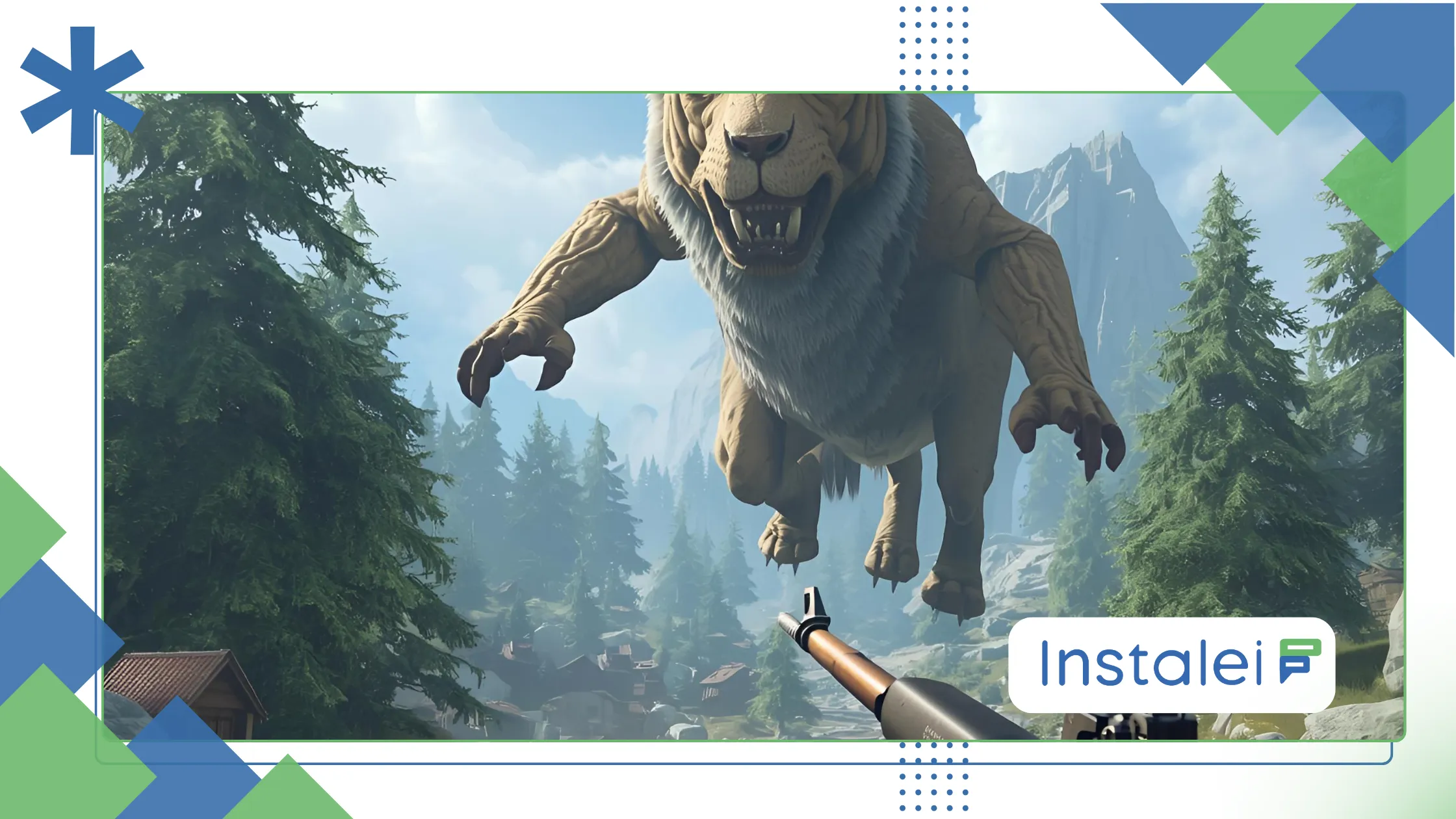
Growth of realistic 3D games for Android. Here's an outline of what we'll cover:
- What is driving the growth of realistic 3D games for Android in Brazil?
- How are advancements in hardware, Android, and technology fueling this trend?
- Why are Brazilian gamers addicted to realistic 3D games?
- What are two outstanding original examples in 2025?
- What challenges and opportunities does this create for developers?
- How can Brazilians monetize and scale these games?
- Frequently Asked Questions
Read also: 5 Lightweight and Addictive Games for Your New Gaming Laptop
What is driving the growth of realistic 3D games for Android in Brazil?
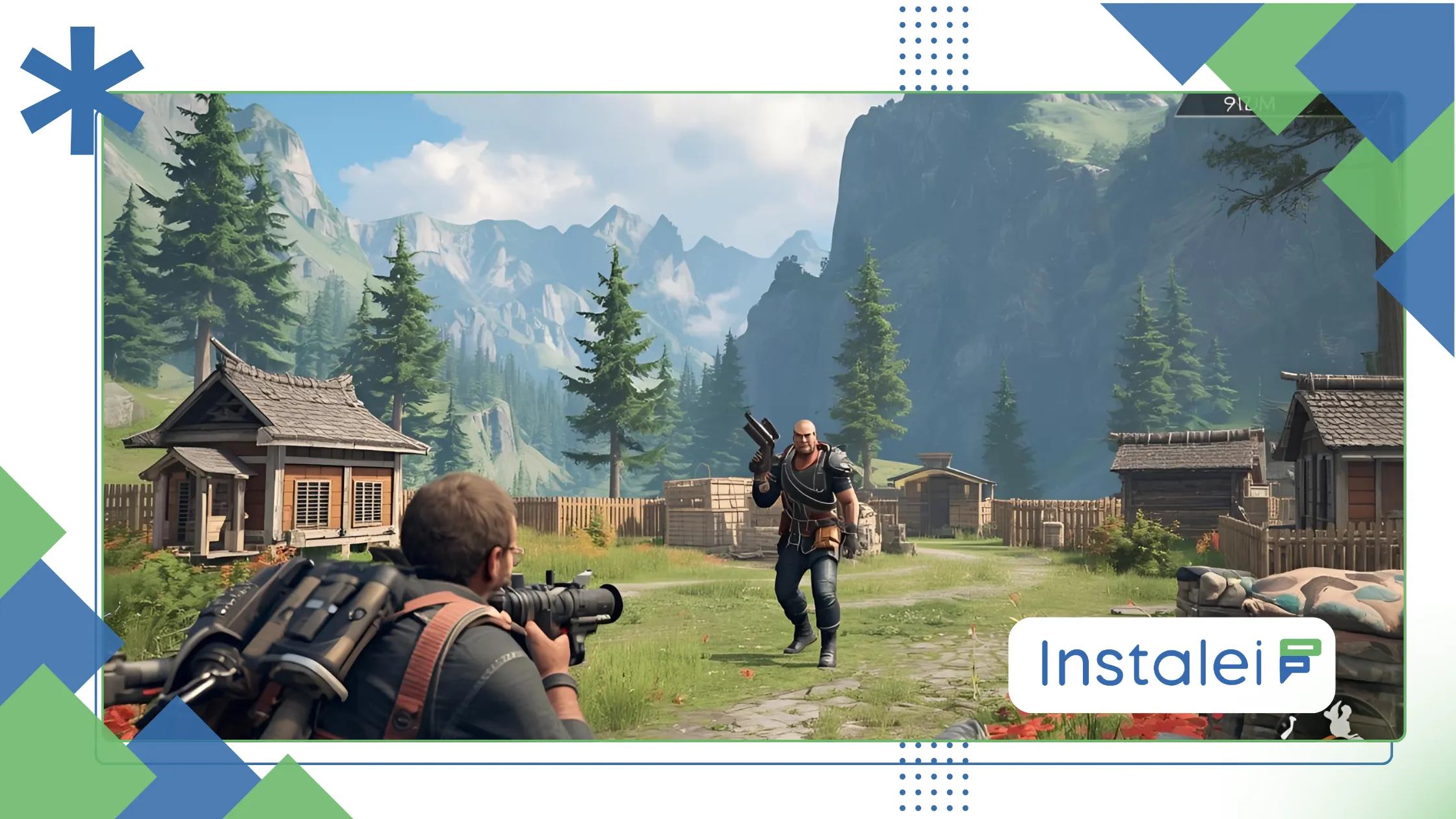
Affordable mid-range Android phones now feature Snapdragon 7 series chips and Adreno GPUs capable of lightweight ray tracing.
Furthermore, the expansion of 5G has reached 60% of coverage by mid-2025, reducing latency for smooth online 3D battles.
Therefore, gamers from the favelas of São Paulo or the interior of the Pantanal can access photorealistic simulations without lag.
Moreover, local studios jumped from 500 in 2020 to over 1,000 in 2025, according to industry trackers.
Consequently, titles that blend samba rhythms with drifting around curves gain cultural resonance.
Thus, downloads of top realistic 3D games totaled millions weekly in Q1.
However, economic pressures favor free-to-play models with cosmetic IAPs, echoing global successes.
Therefore, the 90 million Brazilian gamers demand value: realistic physics instead of flat caricatures.
In this way, market share migrates from 2D hyper-casuals to 3D heavyweights.
How are advancements in hardware, Android, and technology fueling this trend?
Unity's High Definition Render Pipeline (HDRP), optimized for mobile, manages dynamic lighting on R$ 1.000 devices.
Furthermore, Nanite in Unreal Engine 5.4 enables massive open worlds without crashes.
Therefore, what required powerful PCs in 2020 now runs natively on the Galaxy A-series.
Additionally, updates to the Vulkan API in Android 15 increased frame rates to 30% for 3D titles.
Consequently, silicon-carbon anodes extend sessions to 8+ hours.
++ Game Streaming and Cloud Gaming in Brazil: An Accessible Revolution?
Thus, realistic shadows and reflections appear organic, not forced.
Finally, cross-platform tools like Godot 4.3 accelerate prototyping with documentation in Brazilian Portuguese.
In contrast, the initial 3D mobile suffered from thermal throttling.
Now, AI management dynamically adjusts fidelity.
Why are Brazilian gamers addicted to realistic 3D games?
Young demographic — 70% under 30 years old — seeks escape from the urban grind through lifelike simulations.
Furthermore, the football fever translates into 3D ball physics in FC Mobile, attracting millions weekly.
Therefore, active users on top games reach 11 million, surpassing casual puzzles.
Furthermore, social features such as clan raids foster communities across vast 3D maps.
Consequently, retention explodes 40% above flat games.
Thus, players from Belo Horizonte exchange tactics like pros in street football.
On the other hand, cultural pride shines through: homemade racers imitating drifts on Copacabana Avenue are attracting locals.
However, realism combats churn — fake physics sounds like rigged lotteries.
Isn't it fascinating how pixels now mirror the vibrant chaos of Brazil?
What are two outstanding original examples in 2025?
Example 1: “Fúria das Favelas Draft”, by the indie studio Vortex Games from São Paulo.
Released in March, this hyper-realistic street racer recreates Rio's labyrinthine alleyways with procedurally generated, rain-soaked asphalt.
Players are customizing lowriders with real graffiti from favela artists, reaching 500,000 downloads in the first week.
Additionally, haptic feedback simulates tire squeals on average Android devices.
Furthermore, multiplayer lobbies are buzzing with conversation in Portuguese, peaking at 2 million active users in Q3.
Therefore, it grossed US$$ 450,000 in cosmetics, proving that local flavor sells globally.
Example 2: “Amazonian Peak Hunter”, by WildByte Interactive from Belém.
This survival game simulates a photorealistic jungle, hunting jaguars with bow tension via skeletal animations.
Animal wildlife adapts to the player's habits, turning hunts into chess matches.
Furthermore, AR integration scans real foliage for in-game bonuses.
Consequently, 1.2 million downloads fueled the eco-tourism hype.
Thus, iterations based on community feedback improved realistic mud physics, raising retention to 65%.
| Top Realistic 3D Android Games in Brazil (Average Q1-Q2 2025) | Weekly Downloads (Peak) | Weekly Revenue (Peak) | Weekly Active Users (Peak) |
|---|---|---|---|
| Free Fire x Naruto Shippuden | 463 thousand | US$ 350 thousand | 15.5 million |
| Moto Wheelie 3D | 273 thousand | N/A | 2.1 million |
| EA SPORTS FC™ Mobile Soccer | 198 thousand | US$ 161 thousand | 2.5 million |
| Garena Delta Force | 720 thousand | US$ 51 mil | N/A |
| Global Truck Online | 545 thousand | N/A | 621 thousand |
What challenges and opportunities does this create for developers?
High-fidelity 3D requires optimization for 2GB+ of RAM, eliminating weak devices.
Furthermore, the fragmented Android ecosystem — Samsung, Motorola, Xiaomi — demands extensive testing.
Therefore, outsourced local QA cuts costs in 40%.
Furthermore, monetization shines with hyper-local ads: Carnival skins in February boost IAPs.
Consequently, studios like Vortex report 3x ROI compared to generic global firms.
Thus, government incentives via Abragames fund Unity licenses.
Finally, the talent pool grows with free bootcamps in Recife.
However, piracy via APKs eats away at 20%'s revenue — asset watermarking helps.
In this way, this boom echoes a digital Carnival: chaotic, but lucrative.
Think of it as transforming sugarcane fields into silicon farms — raw local resources fueling high-tech exports.
How can Brazilians monetize and scale these games?
Prioritize hybrids: 70% ad revenue from rewarded post-race video ads.
Additionally, partner with Vivo or Claro for carrier-based billing, bypassing Pix fees.
Therefore, ARPU rises to US$ 8+, in line with Statista averages.
Additionally, use Google Play's geo-targeting for Brazil-first betas.
Consequently, viral clips on TikTok amplify organic installs.
So, scale with cloud saves in Firebase, aiming for 10 million users.
On the other hand, collaborate with influencers like Gaules for live streams.
However, comply with the LGPD (Brazilian General Data Protection Law) for data protection and avoid fines.
Finally, exporting successes: “Fúria das Favelas” on iOS yielded an extra US$200,000.
| Developer Strategies for Success in 3D Android in Brazil | Why It Works | Expected Impact |
|---|---|---|
| Localize UI in Brazilian Portuguese + regional accents | It builds trust. | +25% retention |
| Optimize for entry-level GPUs (Adreno 610+) | Expand audience | 2x downloads |
| Integrate Pix + Boleto (bank slip) | Frictionless | +15%, conversions |
| Weekly events tied to holidays (e.g., Copa do Brasil) | Cultural hook | 40% uplift IAP |
| Unity's Adaptive Performance | Battery friendly | 30% longer sessions |
Growth of realistic 3D games for Android: Frequently Asked Questions
| Question | Response |
|---|---|
| What is the projected revenue for mobile games in Brazil in 2025? | US$ 3.5 billion, with a CAGR of 2.39% until 2030, per Business and Games. |
| Why does Android dominate realistic 3D games in Brazil? | 83% market share; affordable hardware supports engines like Unity HDRP. |
| Which tools should developers prioritize for 3D mobile? | Unity 2023 LTS or Unreal 5.4, with Vulkan for optimizations. |
| How to monetize without alienating Brazilian players? | Free-to-play with local cosmetics and rewarded ads — avoid paywalls. |
| Are there government incentives for game developers? | Yes, digital Rouanet Law and Abragames funds for export. |
| Can realistic 3D games run on inexpensive cell phones? | Yes, with LOD and baking; tested on Moto G series. |
| What is the future for Brazilian indie studios? | Export to Latin America; focus on cultural sims for virality. |
This 3D Android wave is redefining the Brazilian digital playground.
Furthermore, savvy developers will blend technical prowess with cultural awareness.
Finally, who wouldn't bet on a nation transforming pixels into prosperity?
For further reading:
