
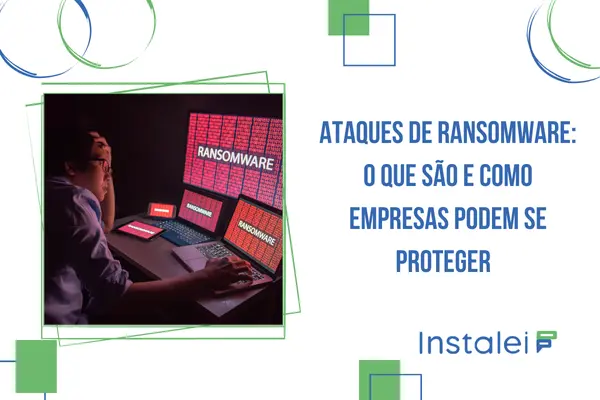
Ransomware attacks are one of the biggest threats to digital security today, affecting businesses of all sizes and sectors.
Advertisements
According to a survey by cybersecurity company Sophos, 661,000 global organizations suffered an attack of this type in 2022.
This article details what characterizes a ransomware attack and presents effective strategies to protect your business.
What is a ransomware attack?
A ransomware attack is a form of cybercrime in which hackers break into systems, encrypt data, and demand a ransom in exchange for releasing the files.
The term "ransomware" comes from the combination of "ransom" and "software".
Criminals use a variety of methods to infect devices, including fraudulent emails, malicious downloads, and vulnerabilities in outdated software.
Then, once inside the network, malware can spread rapidly, crippling operations and causing financial and reputational damage.
These attacks have become more frequent due to the ease of access to malicious tools on the dark web, where criminals offer ready-to-run services.
Additionally, the increased digital dependency in businesses has expanded attack surfaces, exposing organizations to greater risks.
Another worrying factor is the inability of many companies to detect intrusions quickly.
Studies show that it takes some organizations weeks to identify a compromise, which gives hackers plenty of time to maximize damage.
Types of ransomware
There are different types of ransomware, each with specific attack techniques:
- Crypto ransomware: Encrypts essential files, making them inaccessible until ransom is paid.
- Locker ransomware: Completely blocks access to the infected device.
- Ransomware as a Service (RaaS): Hackers sell ready-made kits to other cybercriminals to carry out attacks.
Crypto ransomware, for example, has the main objective of paralyzing critical operations by encrypting fundamental data.
Victims often face a dilemma: pay the ransom or permanently lose their information. This choice becomes even more difficult in scenarios where backups have also been compromised.
Locker ransomware tends to be more destructive, preventing even basic use of devices.
This type of attack is common in sectors such as healthcare, where system unavailability can compromise lives.
Prevention, in this case, is even more crucial.
+ Technological Education for Children: What Your Child Can Learn from Programming
Impacts of ransomware attacks on companies
The damage caused by ransomware goes beyond ransom payments.
They include data loss, recovery costs and reputational damage.
According to an IBM study, the average cost of a data breach is US$1.4T4.35 million.
This value increases significantly for organizations that face prolonged outages or do not have efficient backups.
Below is a table with the main consequences of attacks:
| Consequence | Description |
|---|---|
| Direct financial loss | Ransom payment and technical support costs |
| Damage to reputation | Loss of trust from customers and partners |
| Interruption of operations | Downtime impacting productivity |
| Regulatory fines and penalties | Violation of data protection laws, such as the LGPD |
Data loss can be devastating, especially for businesses that rely on sensitive information such as customer records or intellectual property.
Additionally, companies that fail to comply with data protection regulations face significant legal penalties.
Additionally, disruptions to operations can negatively impact customer confidence, leading to lost revenue and a longer recovery for the business.
Troubleshooting after an attack is time-consuming and requires investment in cybersecurity experts.
How to protect yourself against ransomware attacks?
Protecting your business from ransomware requires a multi-faceted approach.
Here are the best practices:
1. Employee education and training
Most attacks start with human error, such as clicking on malicious links.
Investing in awareness and training programs significantly reduces the risk of compromise.
Conduct regular awareness campaigns with simulated scenarios so employees learn to identify threats.
Emails from phishing, for example, are common tools used by hackers to deceive employees.
Also include interactive workshops and educational materials that teach safe practices for using the corporate internet.
Well-informed employees are the first line of defense against attacks.
2. Regular software updates
Keeping systems and applications up to date is essential to correct vulnerabilities exploited by hackers.
An outdated system is like an open door for intruders.
Companies must adopt automated processes to manage patches and updates efficiently.
This reduces the time systems are exposed to known risks.
Additionally, it is crucial to monitor third-party software and ensure that it is all aligned with the organization's security policies.
Small oversights can lead to big problems.
See also: VPNs: How They Work and Why They're Essential for Your Privacy
3. Implementation of cybersecurity solutions
Use tools such as firewalls, antivirus and artificial intelligence-based threat detection.
These technologies help identify and block attack attempts before they cause damage.
Integrating security tools also enables faster and more efficient response to incidents.
For example, real-time monitoring systems help identify suspicious behavior on corporate networks.
Be sure to regularly review the settings of these tools to ensure they are working optimally.
Security is an ongoing process.
4. Frequent data backup
Performing regular backups is one of the best defenses against ransomware.
Make sure to store them in segregated locations, such as the cloud, to prevent them from being encrypted along with your main files.
An effective backup strategy includes periodic restoration tests to ensure that data can be recovered quickly in the event of an emergency. This reduces the potential impact of attacks.
Invest in automated solutions that perform incremental backups, reducing resource usage and minimizing interruptions to operations.
Prevention is always more effective than cure.
| Backup Frequency | Benefit |
|---|---|
| Daily | Minimizes data loss in case of attack |
| Weekly | Reduces storage costs and is ideal for smaller businesses |
| Monthly | Suitable for less critical information |
5. Attack simulations and response plans
Conducting regular vulnerability testing and attack simulations prepares your team to deal with real-world situations.
A well-defined response plan can mitigate damage quickly.
Create scenarios that simulate real threats, such as attacks through social engineering or vulnerability exploitation.
This ensures that everyone knows what to do in emergencies.
Additionally, review and update response plans periodically to reflect new threats and technological improvements.
Preparation is essential to minimize impacts.

Ransomware trends and future challenges
Attacks are becoming more sophisticated, with criminals adopting social engineering techniques and specific targeting.
Companies in critical sectors such as healthcare and energy are particularly targeted.
With the increasing adoption of IoT (Internet of Things), attack surfaces expand.
Connected devices often have limited security, making them vulnerable targets.
IoT devices not only increase risks, but also make it difficult to monitor all access points.
This reinforces the need for solutions that integrate security and visibility.
Another challenge is legislation.
The LGPD imposes additional responsibilities on companies, requiring the protection of personal data under penalty of severe fines.
Furthermore, collaboration between governments and the private sector is essential to combat criminal networks.
Investing in research and technology is crucial to staying ahead of threats.
Final considerations
Ransomware attacks are not just a technological problem, but a strategic issue for companies.
With prevention, training and the use of advanced technologies, it is possible to mitigate risks and protect your business against these growing threats.
To learn more about how to keep your company safe in the digital environment, follow our blog and stay up to date with the best cybersecurity practices.
